Sprout
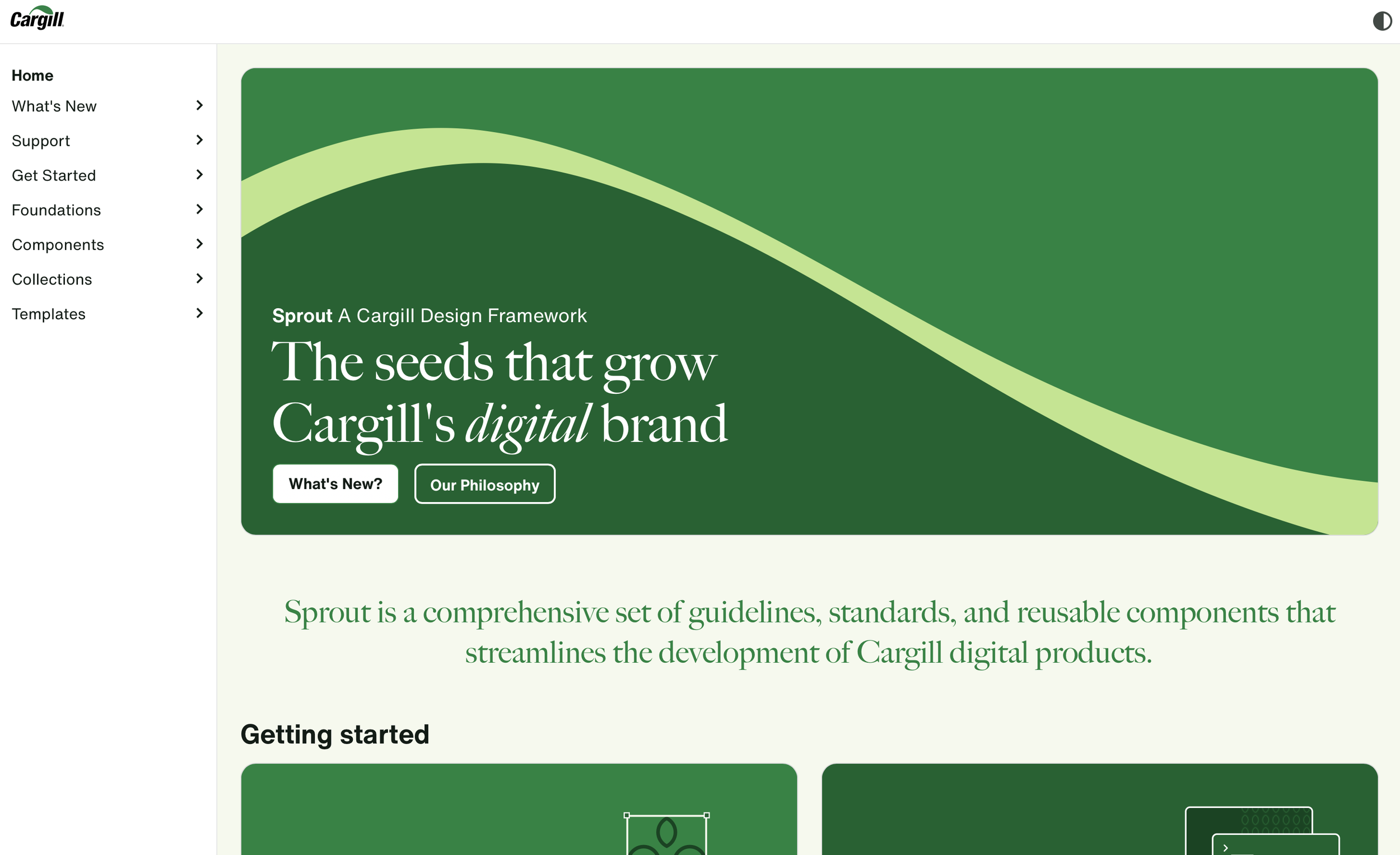
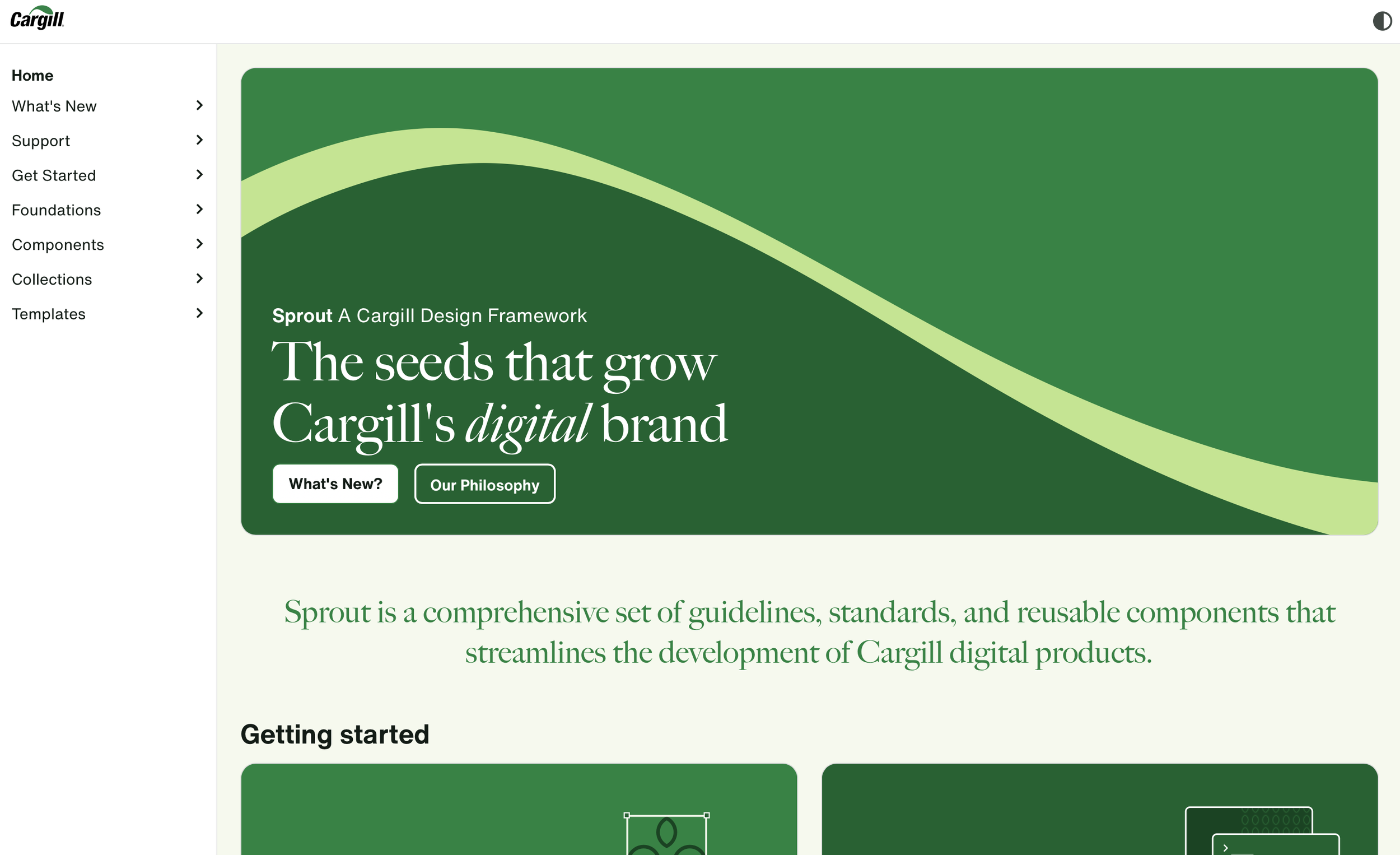
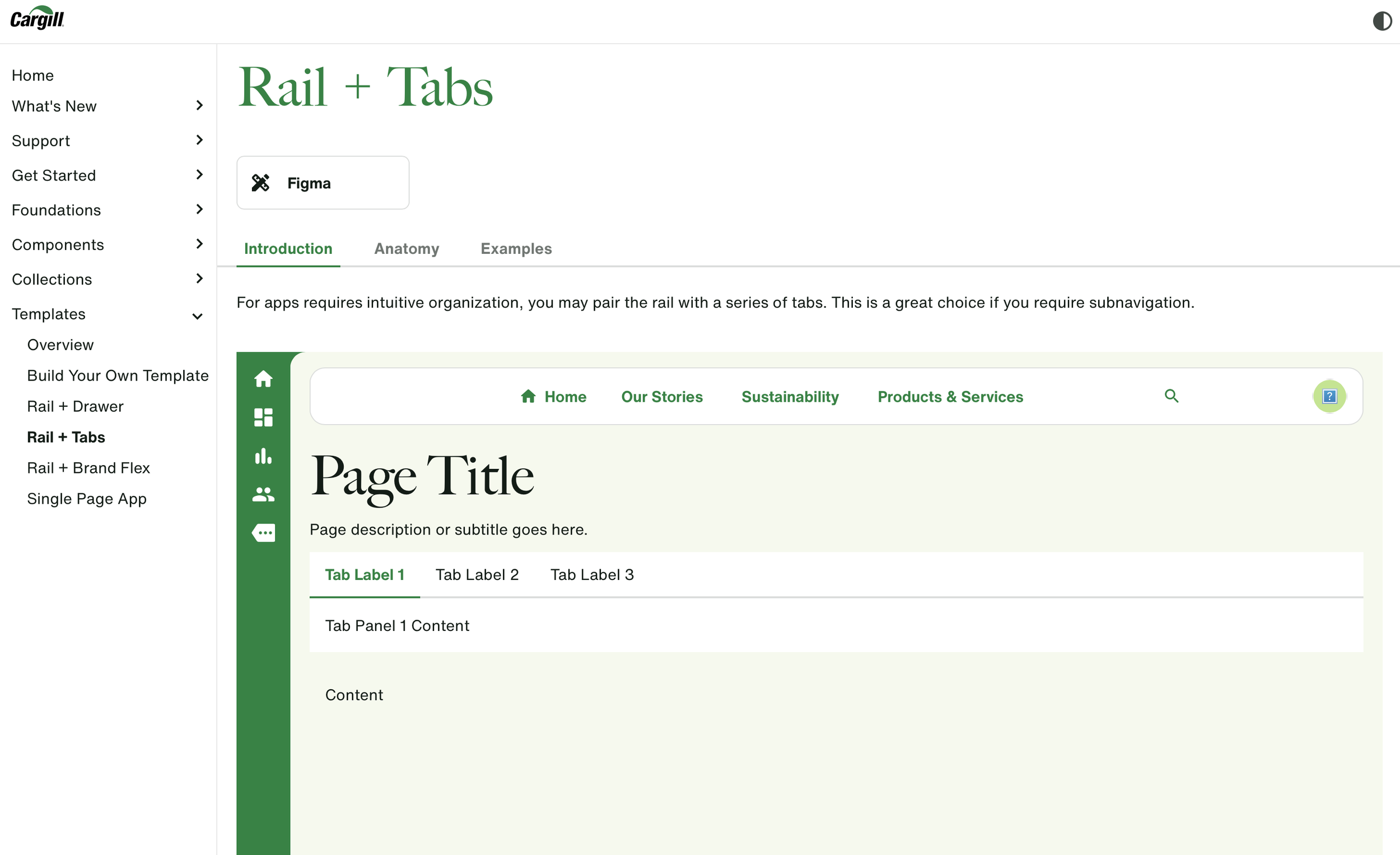
Sprout is Cargill’s enterprise design system—created to unify the company’s digital experiences across internal tools, customer-facing products, and public web properties.

Overview
Sprout is Cargill’s enterprise design system—created to unify the company’s digital experiences across internal tools, customer-facing products, and public web properties. Launched as part of Cargill’s broader Product and Digital Transformation, Sprout provides shared components, patterns, guidance, and governance that enable teams to design and build consistent, accessible, and scalable experiences at enterprise scale.
As Design Director and leader of the UX Center of Excellence, I was responsible for establishing Sprout as a strategic platform, not just a UI library—aligning design, engineering, brand, and product around a shared foundation.
The Problem
Prior to Sprout, Cargill faced challenges common to large, distributed organizations:
Fragmented user experiences across products and platforms
Inconsistent application of brand and accessibility standards
Redundant design and engineering effort across teams
Slow delivery due to re-solving the same problems repeatedly
No shared ownership model for experience quality at scale
Cargill needed a system that could support enterprise complexity, multiple product models (custom, SaaS, COTS), and a global user base—without slowing teams down.
My Role & Responsibilities
As the design system executive lead, I:
Defined the vision, purpose, and success criteria for Sprout
Positioned the design system as a business enabler, not a design artifact
Built and led the central design system team within the UX CoE
Partnered deeply with:
Product leadership
Engineering and platform teams
Brand and marketing
Accessibility and compliance stakeholders
Established Sprout’s:
Governance model
Contribution pathways
Adoption and maturity framework
Championed Sprout with executive leadership, tying it to:
Risk reduction
Speed to market
Cost efficiency
Experience consistency
Design & System Strategy
1. From Components to Capability
Sprout was intentionally framed as more than a component library.
It delivers:
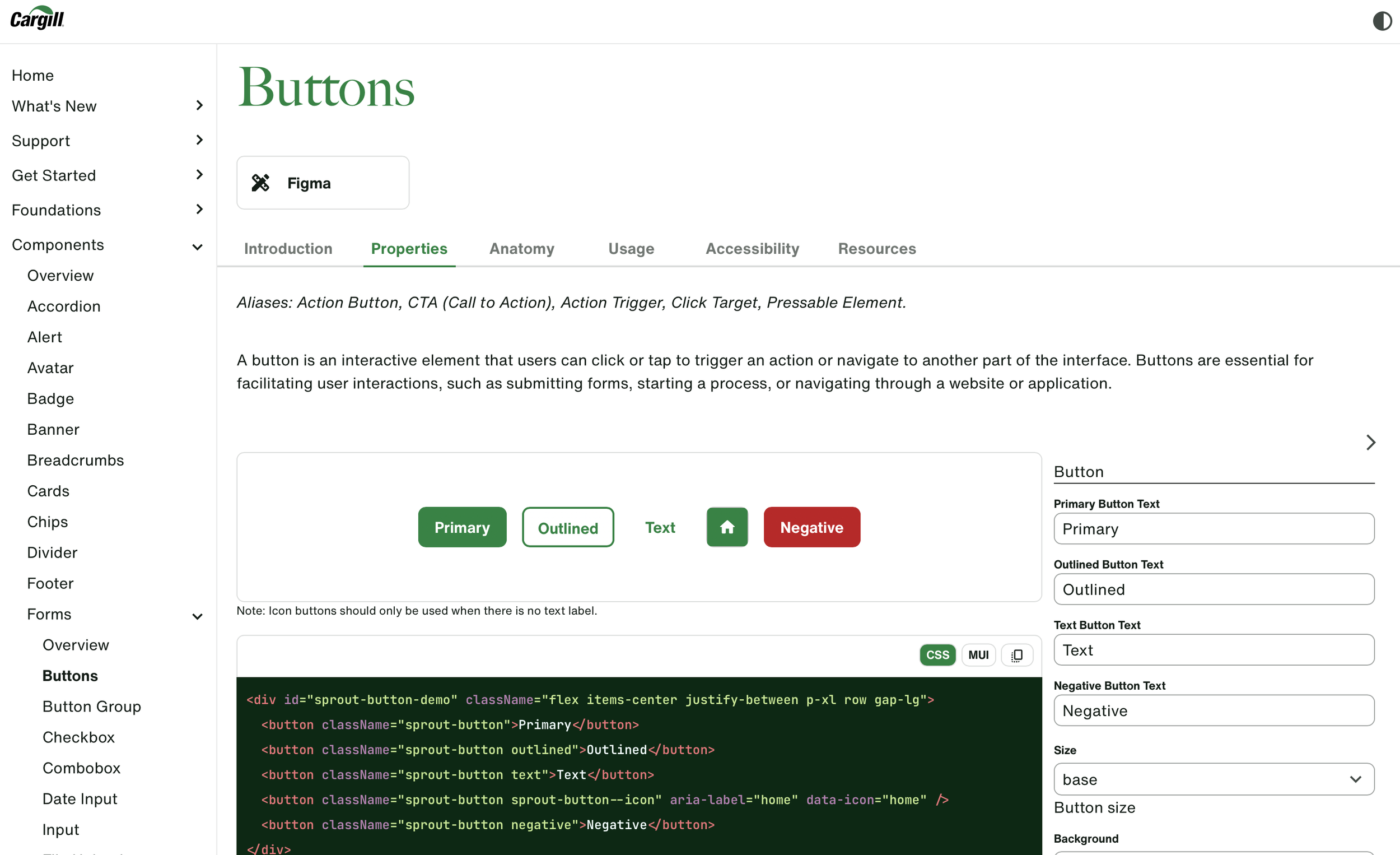
Foundational UI components
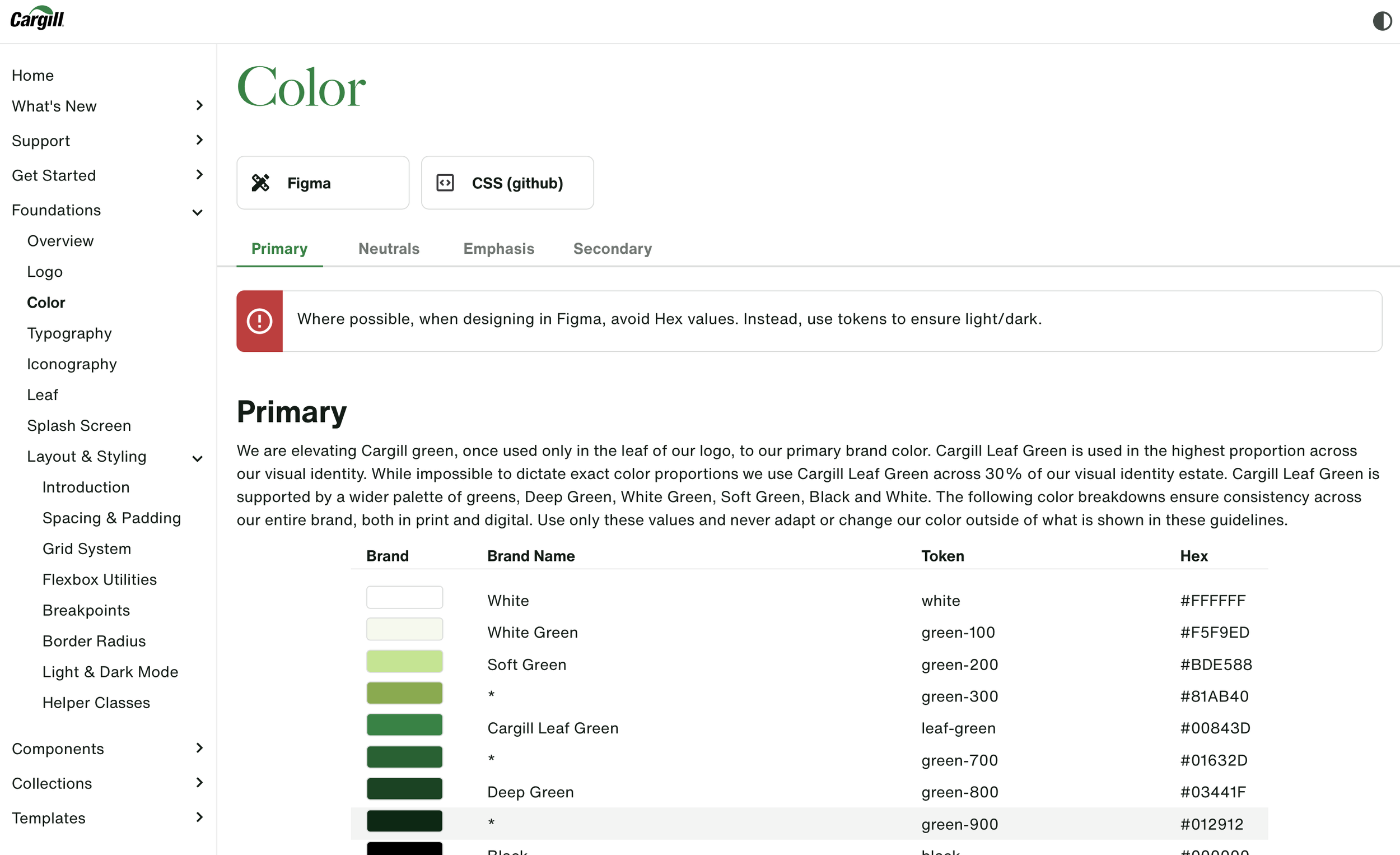
Design tokens and theming
Interaction patterns and usage guidance
Accessibility-first standards
Figma and engineering parity
This allowed teams to move faster with confidence, rather than reinventing solutions.
2. Supporting Multiple Product Models
Cargill operates across a diverse product ecosystem. Sprout was designed to scale across:
Custom-built internal tools
Customer-facing digital products
SaaS and COTS platforms
Marketing and brand experiences
The system balanced flexibility with guardrails, enabling reuse without stifling product needs.
3. Governance Without Bottlenecks
A key part of my role was defining how Sprout would scale sustainably.
This included:
Clear ownership and decision rights
Contribution models for product teams
Versioning and change management
Maturity levels to guide adoption over time
Governance was designed to enable teams, not block them.
4. Design System as Organizational Leverage
Sprout became a mechanism for:
Improving UX consistency across products
Raising accessibility as a default, not an afterthought
Coaching teams on better design and product practices
Creating a shared design language across disciplines
This helped elevate UX from execution to strategic influence.
Outcomes & Impact
Launched Cargill’s first enterprise design system
Improved consistency across internal and external digital experiences
Reduced redundant design and development effort
Accelerated delivery by standardizing patterns and components
Established a scalable foundation for future product growth
While specific metrics are internal, Sprout is now a core pillar of how Cargill designs and builds digital products.
What This Demonstrates
Executive-level ownership of a design system
Deep experience scaling UX in a complex enterprise
Strong cross-functional leadership (Design, Product, Engineering, Brand)
Governance, operating models, and maturity frameworks
Ability to connect design systems to business outcomes
Why It Matters
Sprout represents a shift from isolated UX efforts to a center-led, scalable experience capability.
It shows how design systems, when led strategically, can:
Reduce risk
Increase speed
Improve quality
Align large organizations around user-centered thinking