Kitchen Blueprint
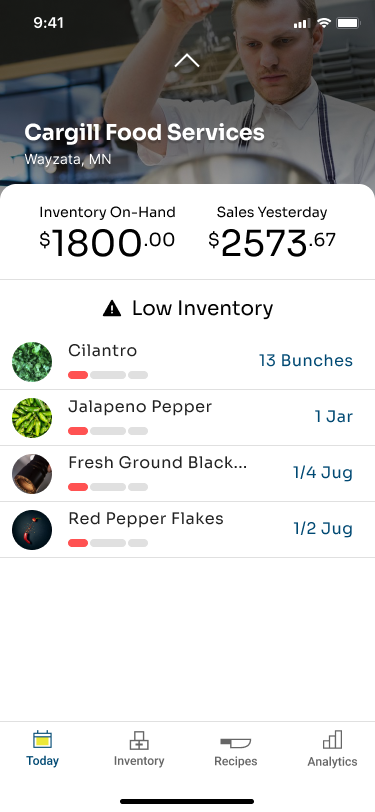
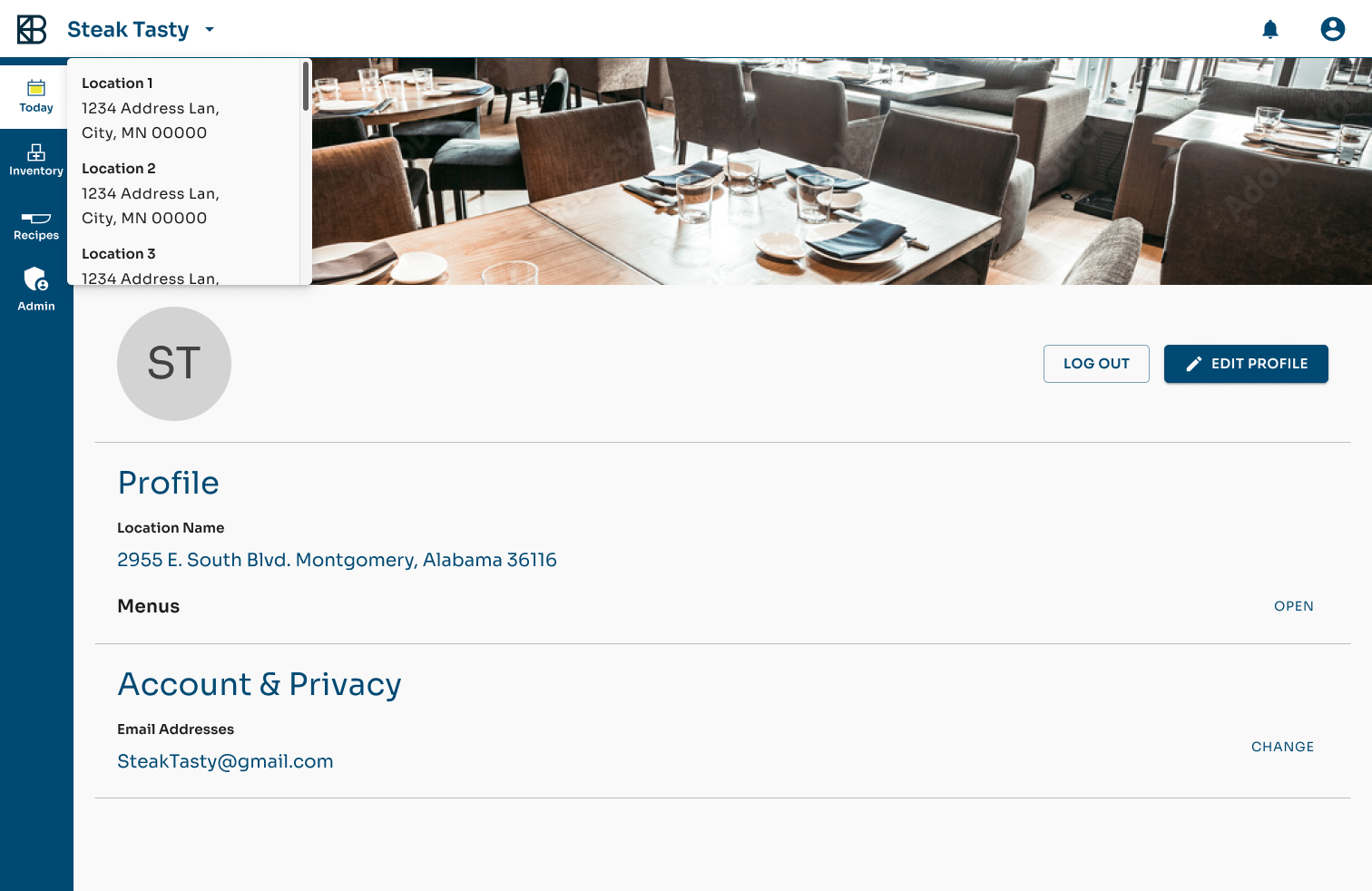
Cargill's "Kitchen Blueprint" is an AI-powered digital platform for commercial kitchens, acting as the "brain" to manage inventory, track stock, and automate ordering for food service operations, reducing waste and manual labor. It integrates with Cargill's product lines to optimize food use, support menu development, and improve kitchen efficiency by providing a single source of truth for supplies, helping restaurants run more profitably and sustainably.
Overview
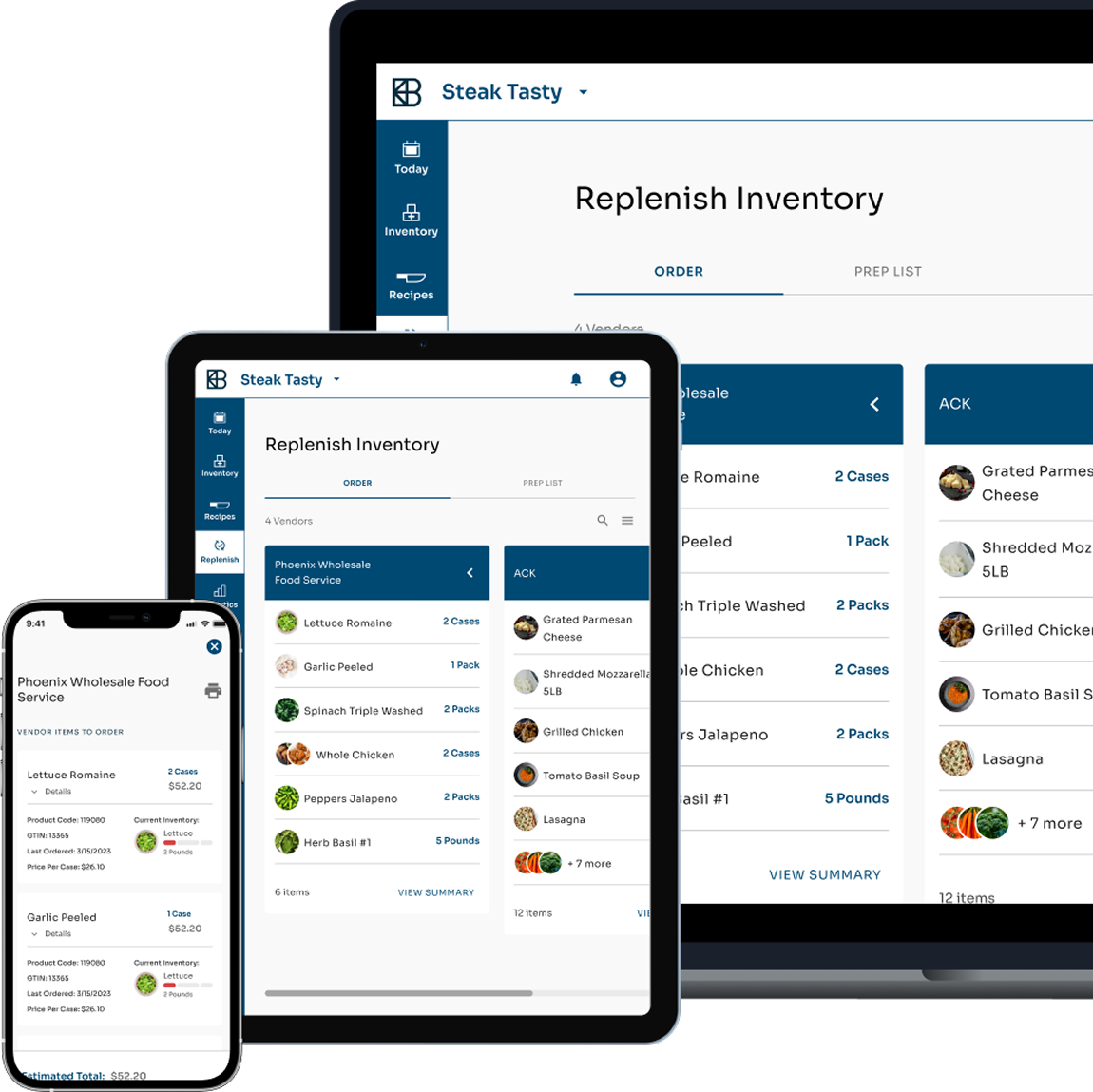
Kitchen Blueprint is a Cargill-developed digital platform designed to bring transparency, intelligence, and optimization to restaurant back-of-house (BOH) operations. Positioned as the “brain of the kitchen,” the platform aggregates operational data to identify cost drivers, reduce waste, surface automation opportunities, and ultimately improve profitability and labor efficiency.
As design lead, I shaped the product vision, experience strategy, and end-to-end UX, translating complex operational and data-heavy concepts into actionable insights that operators could understand and trust.
The Problem
Restaurant kitchens generate massive amounts of data—but very little of it is visible or actionable.
Key challenges included:
Limited visibility into where loss, waste, and inefficiency actually occur
Operational decisions driven by intuition rather than evidence
Fragmented systems across inventory, labor, and production
Rising labor costs and pressure to identify automation opportunities
Existing tools focused on reporting, not decision-making
Cargill saw an opportunity to leverage its deep foodservice expertise and digital innovation capabilities to create a platform that could make the invisible visible.
My Responsibilities
Led design for a net-new, data-driven product
Defined the experience vision for Kitchen Blueprint as a:
Decision support system
Operational intelligence platform
Designed:
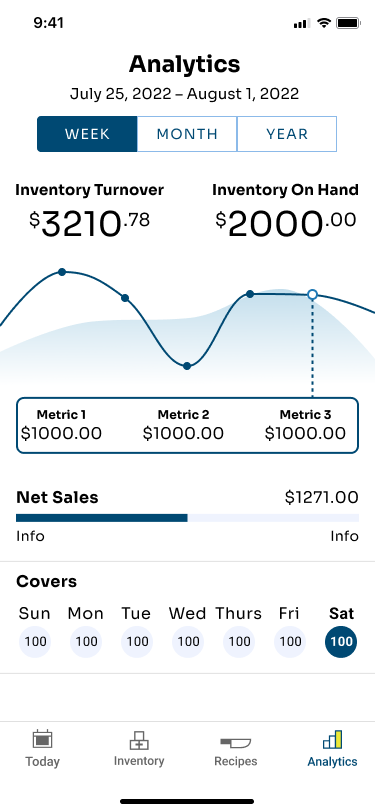
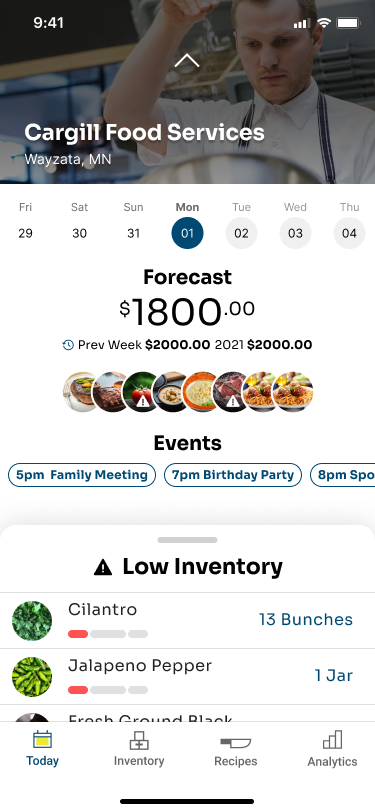
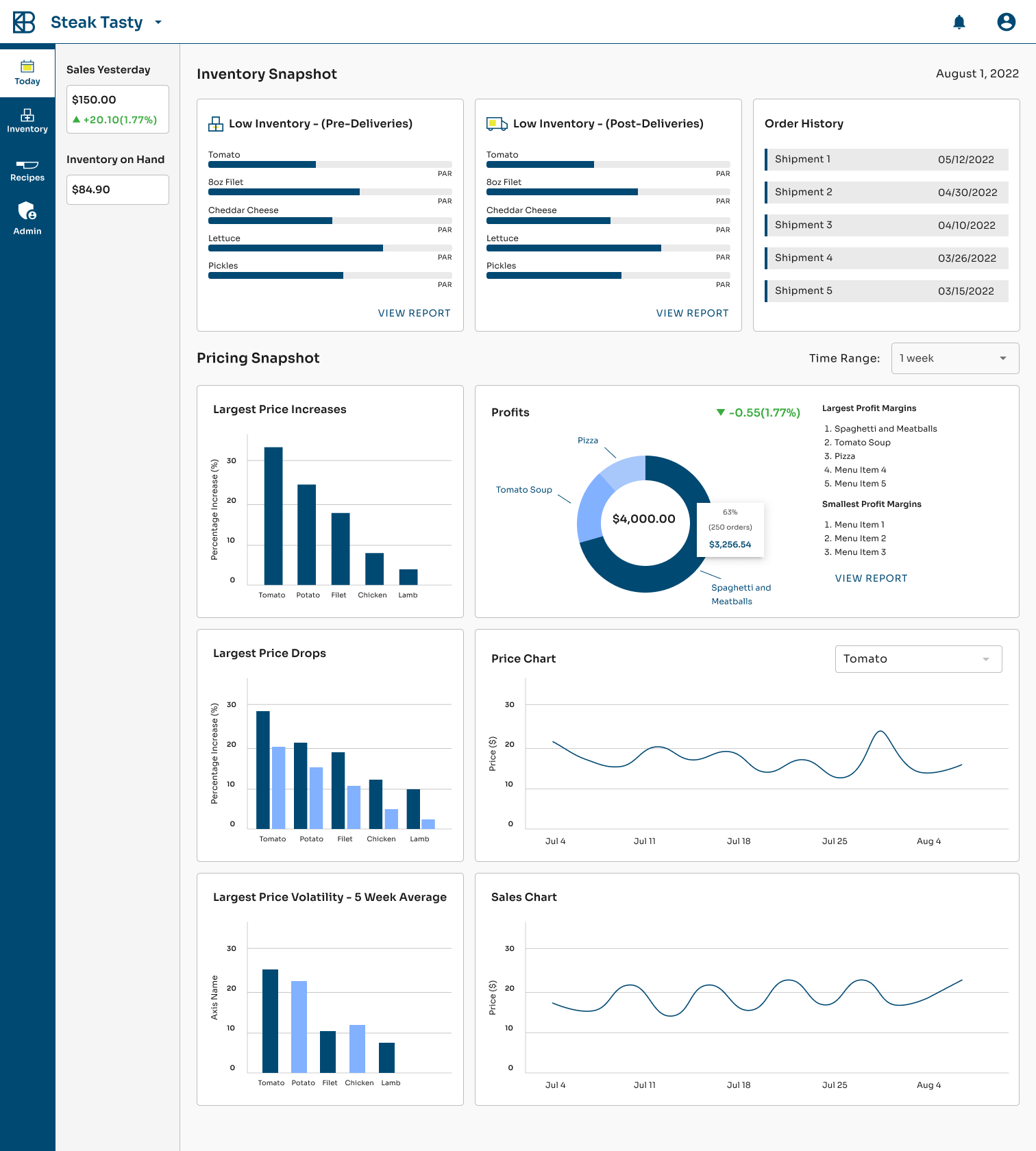
Core dashboards and data visualizations
Insight discovery and prioritization flows
BOH-centric interaction patterns
Partnered closely with:
Product management
Engineering and data teams
Foodservice and operations experts
External innovation partners
Balanced technical complexity with usability and clarity
Design Approach
1. From Data to Decisions
Kitchen Blueprint was not about showing more data—it was about showing the right data.
Design focused on:
Highlighting where costs concentrate
Making waste and loss immediately visible
Surfacing patterns operators could act on quickly
Insights were framed around “what’s happening,” “why it matters,” and “what to do next.”
2. Designing the Brain, Not the Interface
Rather than mimicking traditional dashboards, the experience was designed to feel like an operational control layer:
Clear prioritization over raw metrics
Visual hierarchy that guided attention
Progressive disclosure for deeper analysis
This allowed operators to move from overview to action without friction.
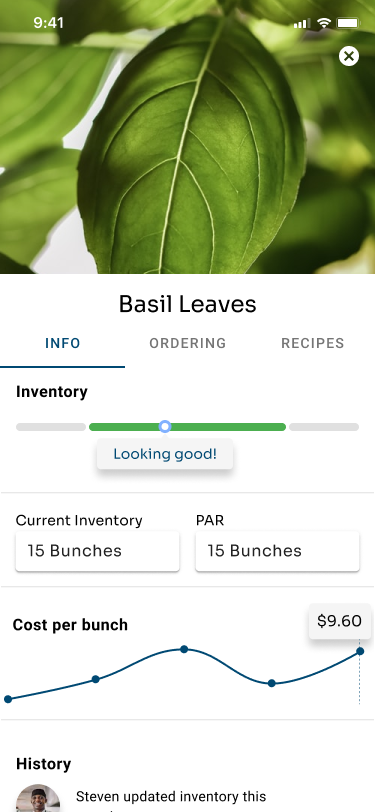
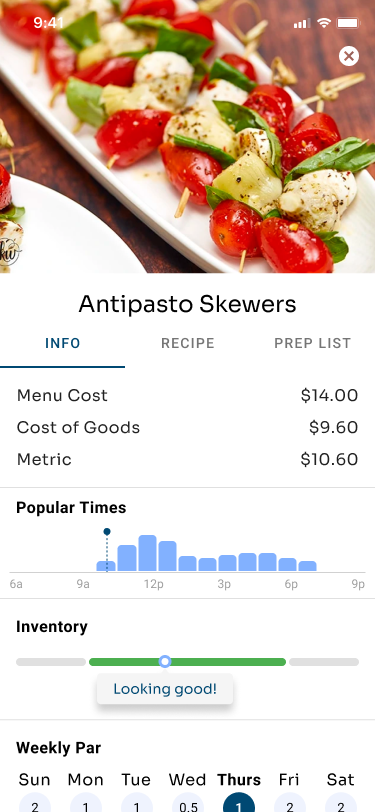
3. Real-Time Inventory Visibility with Cameras
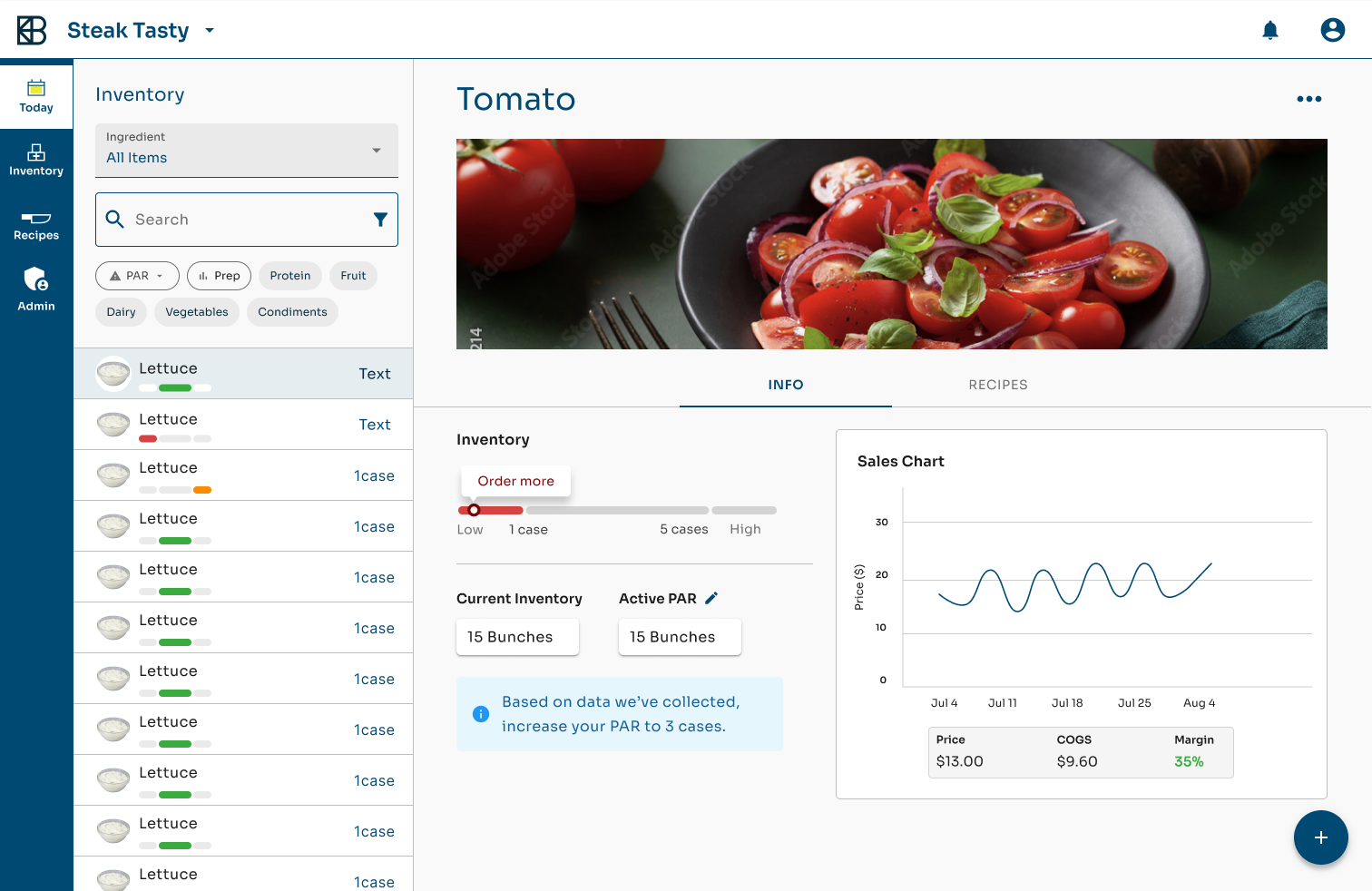
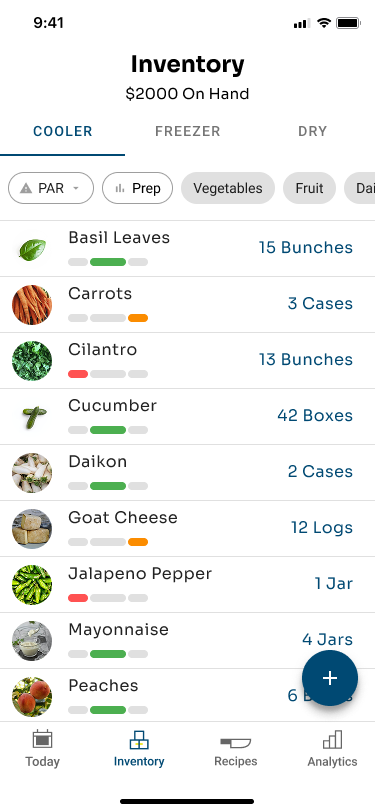
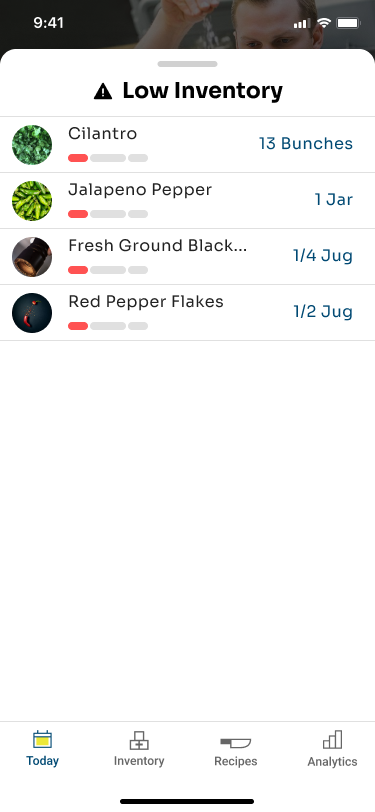
A key innovation was integrating in-restaurant cameras to capture stock levels in real time.
Design considerations included:
Visualizing camera-derived inventory data in a way operators could trust
Blending automated signals with human oversight
Making stock visibility feel supportive, not punitive
This capability helped bridge the gap between physical kitchens and digital systems, enabling more accurate inventory tracking and waste reduction.
4. Designing for Automation Readiness
Kitchen Blueprint was intentionally forward-looking:
Highlighting processes suitable for automation
Identifying labor-intensive or error-prone steps
Supporting future integration with automated systems
The experience helped restaurants see where automation would deliver the most value, not just where it was possible.
Outcomes & Impact
Delivered a foundational intelligence platform for BOH operations
Enabled operators to:
Identify cost drivers
Reduce waste
Improve labor efficiency
Demonstrated how data, sensors, and design could work together to modernize kitchens
Positioned Cargill as a digital innovation partner, not just an ingredient supplier
While specific metrics are proprietary, Kitchen Blueprint validated the concept of a centralized BOH intelligence layerfor foodservice operations.
What This Demonstrates
Leading design for data-heavy, operational products
Translating complex systems into clear, actionable experiences
Designing across software, hardware, and physical environments
Strong partnership with data science, engineering, and domain experts
Ability to define and ship net-new platforms inside large enterprises
Why It Matters
Kitchen Blueprint reinforced a core design belief that guides my work today:
The future of operations isn’t more tools—it’s better intelligence.
By designing the brain of the kitchen, we enabled smarter decisions, reduced waste, and opened the door to meaningful automation at scale.